San Diego - Chula Vista - Oceanside
Call Now:  (619) 787-3443 Open Now

Drain Cleaning in San Diego for Clogs, Slow Drains and Sewer Lines


San Diego plumber performing professional drain cleaning for a clogged residential drain

Professional Drain Cleaning in San Diego for More Than a Temporary Fix

A slow sink, backed-up shower, overflowing floor drain, or repeatedly clogged sewer line can all be described as a drain problem, but they do not necessarily have the same cause. Hair may be restricting a bathroom drain, grease can coat the inside of a kitchen line, and several fixtures backing up together may indicate a problem farther downstream in the main sewer. Professional drain cleaning starts by determining where the restriction is and choosing a cleaning method that makes sense for that particular line.

At California Plumbing, we provide drain cleaning and sewer cleaning throughout San Diego County for residential, commercial, rental, and multi-unit properties. Depending on what we find, the service can involve conventional cable cleaning, a sewer camera inspection, root removal, or hydro jetting for heavier buildup. The goal is to restore drainage without automatically using more equipment than the problem requires.

A Drain Plumber Should Identify Which Part of the System Is Clogged

The location of the symptoms provides useful information. One slow bathroom sink often points toward a local fixture or branch drain. A kitchen sink that repeatedly fills with standing water may have grease or food residue farther into the line. When toilets, tubs, showers, or floor drains begin reacting at the same time, the restriction may be in a shared branch or main sewer line instead.

The best drain service is not always the most aggressive cleaning method. A straightforward clog may only need cable cleaning. A line coated with grease or scale may benefit from hydro jetting. A recurring sewer backup can require camera inspection to find out why the same problem continues to return.

Common Drain Problems We Evaluate and Clear

Kitchen Sink Clogs

Food particles, grease, soap, and residue can narrow a kitchen drain until the sink begins draining slowly or backing up. Cleaning should address the location and type of restriction instead of repeatedly relying on chemical drain products.

Bathroom and Shower Drains

Hair, soap residue, personal-care products, and other material can collect inside bathroom drains. The restriction may be close to the fixture or farther into a shared branch serving more than one bathroom fixture.

Main Sewer Line Backups

When several fixtures are affected at the same time, the restriction may be in the main sewer rather than one individual drain. Sewer cleaning can require a different access point, equipment, and inspection process than a simple sink clog.

Recurring Clogs Need More Than Repeated Clearing

A drain that clogs once after an unusual amount of material enters the line is different from a pipe that needs service every few months. Repeat problems can indicate grease coating the pipe wall, roots entering a sewer joint, scale inside older plumbing, a damaged section of pipe, or an obstruction that was never completely removed.

If the same line continues to cause trouble, a sewer or drain camera can help determine what is happening beyond the fixture. Once the cause is visible, the next service can be chosen around the actual condition rather than repeatedly performing the same drain cleaning and hoping for a different result.

Structural defects are handled differently from clogs. If inspection shows cracks, a collapsed section, a significant offset, or another damaged area, our sewer and drain repair services can address the pipe itself. Qualifying damaged lines may also be candidates for trenchless pipe relining.
What Happens During Professional Drain Cleaning in San Diego

A drain cleaning appointment should answer two questions: where is the restriction, and what is the most appropriate way to remove it? The answer can be simple for an isolated fixture clog or more involved when several drains are affected, the problem keeps returning, or the blockage is located in the main sewer.

Our process is designed to separate straightforward clogs from deeper drain and sewer problems before recommending additional work.

Step 1: Evaluate the Drain Problem

We start with the symptoms and affected fixtures. A single slow sink, several backed-up drains, and water appearing at a sewer cleanout point toward different parts of the drainage system. Testing the fixtures helps narrow down where the restriction is located.

Step 2: Inspect Deeper Lines When Needed

Recurring problems or main sewer symptoms can call for camera inspection. Video inspection helps locate roots, buildup, pipe damage, standing water, or another condition that may change the way the drain or sewer line should be cleaned.

Step 3: Clear the Restriction

The cleaning method is selected for the type and location of the clog. That can mean cable cleaning for a localized obstruction or hydro jetting when grease, sludge, scale, roots, or broader buildup need to be removed from more of the pipe interior.

Step 4: Test Drainage and Review the Result

After clearing the line, we check how the affected fixtures drain. When inspection reveals a damaged pipe or another condition that cleaning cannot correct, we can explain that separately so you know why a repair may be needed.

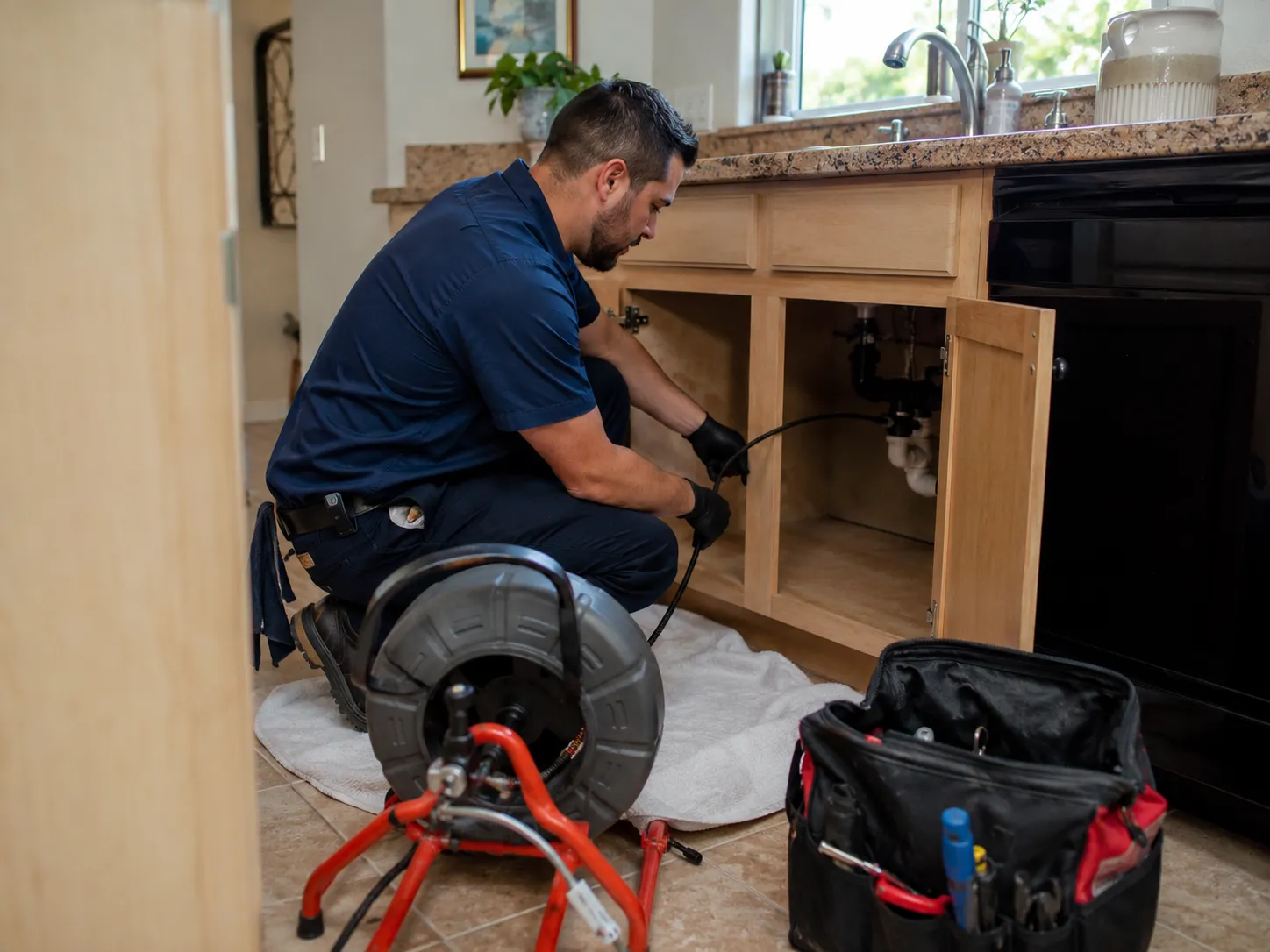
San Diego plumber clearing a clogged residential kitchen drain with professional drain cleaning equipment

Drain Snaking and Cable Cleaning for Localized Clogs

Mechanical cable cleaning remains useful because many drain problems do not require hydro jetting. A cable or auger can travel through the drain and break apart, retrieve, or create a clear path through a localized obstruction. Hair, paper, food material, and similar clogs can often be addressed this way.

The correct cable size and access point depend on the drain being serviced. A bathroom sink line is different from a larger branch drain or main sewer. Professional equipment allows the plumber to match the tool to the line rather than forcing one machine through every type of plumbing.

If drainage returns normally and the problem does not keep coming back, additional cleaning may not be necessary. Persistent or repeat clogs are where camera inspection or a more thorough cleaning method becomes more useful.

When Hydro Jetting Becomes Part of Drain Cleaning

Hydro jetting is useful when the problem is spread along the pipe wall rather than concentrated at one point. Grease, sludge, mineral deposits, loose scale, and certain root restrictions can remain inside the pipe after a basic cable has reopened the center of the line.

In those situations, hydro jet drain cleaning can clean a larger portion of the interior pipe. The line still needs to be evaluated first because pipe material and condition affect whether high pressure cleaning is appropriate.

Keeping the distinction clear also prevents the drain cleaning page from treating hydro jetting as the answer to every clog. A customer with one hair blockage in a bathroom sink has a different problem from a restaurant line coated with years of grease.

Sewer Cleaning for Main-Line Restrictions

Sewer cleaning deals with the larger drain carrying wastewater away from the property. Symptoms often show up in more than one location. A toilet may bubble when another fixture drains, wastewater can appear at a lower shower or floor drain, or several fixtures can begin draining slowly around the same time.

The main sewer can be restricted by roots, paper, wipes, grease, debris, scale, or deterioration inside the pipe. Clearing the obstruction restores flow, but recurring sewer problems deserve closer inspection because damage in the pipe can allow the same restriction to develop again.

Sewer cleaning removes material that is blocking the line. It does not correct a collapsed pipe, significant belly, broken joint, or severe deterioration. Those conditions require a sewer repair solution rather than repeated cleaning.

Drain Cleaning Services for Kitchens, Bathrooms, Sewers and Commercial Properties

The material entering a drain changes from one part of a property to another. That is why professional drain services should be based on the affected line instead of treating every clog the same way. Kitchen waste tends to create different restrictions than bathroom plumbing, and a main sewer has different access and equipment requirements than either one.

Kitchen Drain Cleaning

Grease, food residue, soap, and other material can accumulate farther down a kitchen line than what is visible below the sink. A localized obstruction may be cleared mechanically, while heavier wall-to-wall buildup can require a different cleaning approach.

Bathroom Drain Cleaning

Hair and soap are common bathroom restrictions, but the location can vary. If one drain is affected, the problem may be close to the fixture. When a tub, sink, and toilet all react together, the restriction may be farther into the branch or sewer.

Commercial Drain Cleaning

Restaurants, apartment buildings, retail properties, offices, and other high-use facilities can place more demand on shared drainage systems. Commercial drain cleaning may involve larger lines, different access points, and recurring maintenance concerns.

Why a Drain Can Still Be Slow After the Obvious Clog Is Gone

Opening the center of a restriction does not always mean the entire problem has been removed. A kitchen line may still have grease covering much of the pipe wall. An older cast iron drain may contain heavy scale. Roots can remain at a sewer joint after enough of the growth has been cut away to restore temporary flow.

This is one reason the history of the drain matters. If the same line was serviced recently and has already slowed down again, that information can point toward a broader buildup or an underlying defect rather than another unrelated clog.

Further cleaning or inspection should be based on what the pipe needs. That may mean hydro jetting, camera inspection, root removal, or a repair recommendation if cleaning reveals structural damage.

Main Sewer Cleaning for Multiple Backed-Up Drains

A main sewer restriction can affect plumbing throughout a house or building. One common clue is that using one fixture causes water or air movement somewhere else. A toilet may gurgle when a shower drains, or wastewater can rise in a lower tub or floor drain when another fixture is used.

Cleaning the sewer requires access to the main line rather than repeatedly working on individual fixtures. Once the restriction is cleared, camera inspection can help identify roots, damaged joints, corrosion, scale, or another condition that explains why the sewer became blocked.

If the line is structurally sound, cleaning may be the complete service. If the same sewer continues to fail because the pipe itself is deteriorating, moving from cleaning to an appropriate drain repair can prevent the cycle of repeated backups.

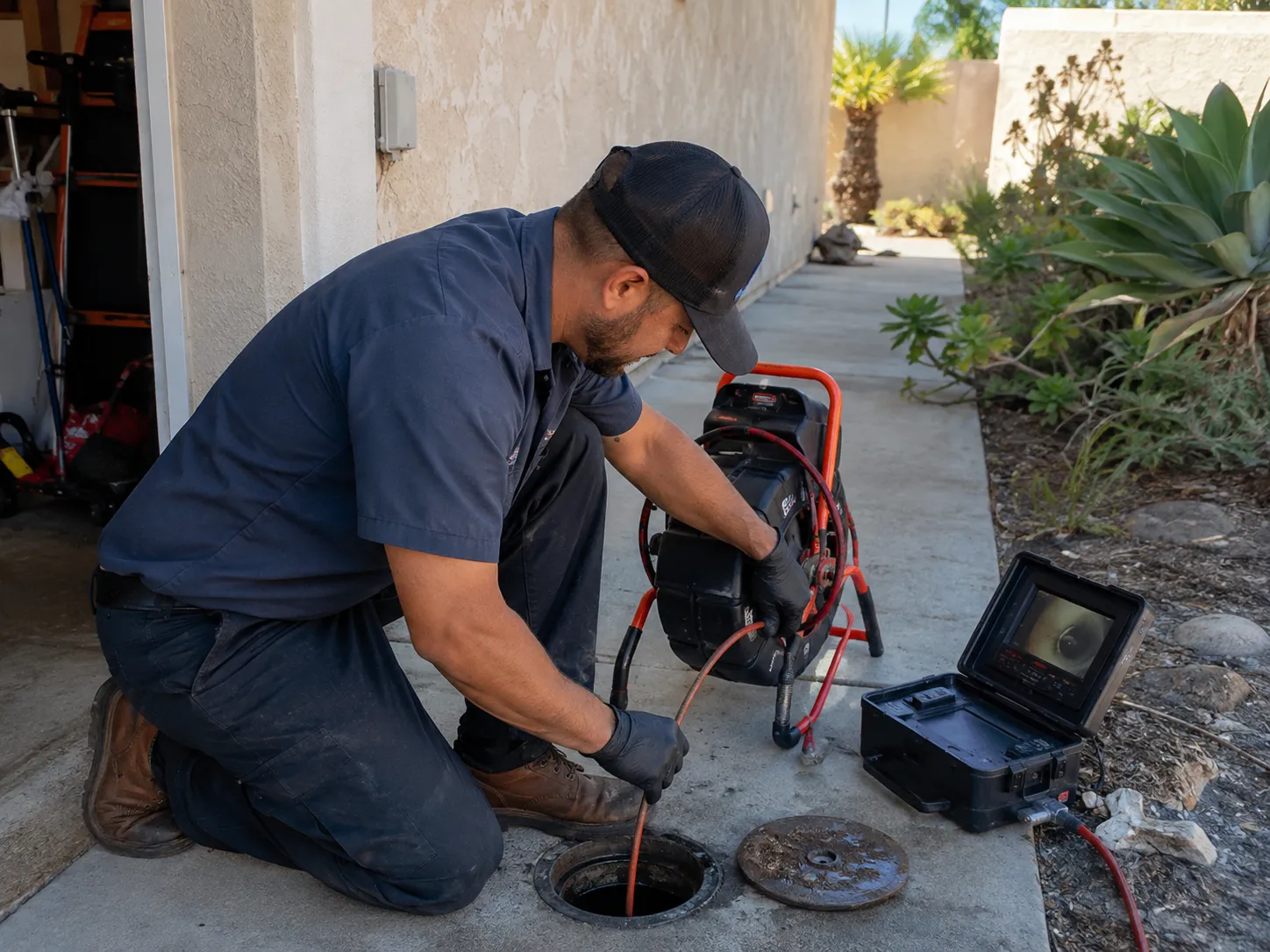
San Diego County plumber inspecting and cleaning a residential main sewer line through an exterior cleanout

Drain Cleaning Versus Drain Repair

Drain Cleaning

Drain cleaning removes material that is restricting normal flow. Hair, grease, paper, sludge, soap residue, scale, roots, and other debris can all create restrictions depending on the line.

When the pipe is otherwise in usable condition, removing the obstruction may be all that is required.

Drain or Sewer Repair

Drain repair addresses a defect in the plumbing itself. Cracked pipe, severe corrosion, a collapsed section, major joint displacement, and other structural problems are not corrected by simply cleaning the line.

Camera inspection can help determine when recurring drain cleaning has become a repair issue.

What Can Cause Repeat Sewer and Drain Problems in San Diego?

Drain problems develop for many reasons, including ordinary daily use. Kitchens accumulate grease and food residue. Bathrooms collect hair and soap. High-use properties move more waste through shared lines. Older sewer systems may also have rough interiors, corrosion, roots at joints, or other age-related conditions that collect debris more easily.

Tree and shrub roots are particularly important when they repeatedly appear during sewer cleaning. Roots do not enter a sealed pipe without an opening. Removing the growth restores drainage, but recurring roots can indicate that a damaged joint or crack should eventually be addressed.

Likewise, heavy corrosion or scaling inside an older line can make a drain more prone to collecting material. If enough sound pipe remains, pipe relining may be worth evaluating. More severe damage can require conventional sewer or drain repair.

Drain Cleaning and Sewer Cleaning Across San Diego County

California Plumbing provides drain and sewer services throughout San Diego County. A clogged kitchen line in a single-family home may need a straightforward mechanical cleaning, while a recurring sewer backup at an older property can require camera inspection and a more detailed service plan. We base the work on the symptoms and condition of the actual plumbing rather than assuming every drain problem needs the same solution.

Drain Cleaning in San Diego

Our San Diego drain services cover clogged kitchen sinks, bathroom drains, tubs, showers, floor drains, branch lines, and main sewer restrictions. Established properties can also develop recurring problems from roots, corrosion, scale, or older drain materials.

When a simple cleaning does not explain why the problem keeps returning, we can inspect farther into the line and discuss the next step.

Drain Cleaning in Chula Vista

Property owners looking for drain cleaning in Chula Vista may be dealing with one clogged fixture, a shared branch problem, or a main sewer restriction. Identifying which section is affected keeps the cleaning focused on the actual source of the backup.

Sewer cleaning, hydro jetting, and camera inspection are available when the symptoms point beyond a simple fixture clog.

Drain Cleaning in Oceanside

For homes and businesses needing drain cleaning in Oceanside, the same diagnostic approach applies. We look at which fixtures are affected, how often the problem occurs, and whether the restriction appears local or farther down the drainage system.

Recurring sewer problems can be inspected for roots, buildup, deterioration, or another condition that may require more than repeat cleaning.

When to Request an Emergency Drain Service

A drain does not have to be completely blocked before it deserves attention, but certain symptoms are more urgent than others. Wastewater backing up into a shower or floor drain, toilets that will not flush because the main line is blocked, sewage appearing around a cleanout, or several fixtures suddenly backing up together can indicate a significant sewer restriction.

Continuing to use water throughout the property can make a main-line backup worse. If the symptoms point toward an active plumbing emergency, call rather than continuing to run fixtures while waiting to see whether the blockage clears on its own. Our emergency plumbing services can be used when the situation needs more immediate attention.

Drain Cleaning for Rental, HOA and Multi-Unit Properties

Shared plumbing introduces another layer of diagnosis because a restriction can affect one unit, several neighboring units, or a larger building drain. Property managers often need to determine whether the problem belongs to an individual fixture, a shared branch, or the main sewer before authorizing more extensive work.

Repeat drain calls also provide useful information. If the same line is being cleared over and over, camera inspection or a more thorough cleaning can help determine whether grease, scale, roots, damaged pipe, or another underlying condition is responsible.

For apartments, condominiums, HOAs, and other shared properties, our HOA and apartment plumbing services can coordinate drain cleaning with other plumbing work affecting the property.

Related Drain and Sewer Services

Drain cleaning is often the starting point because removing the obstruction makes it easier to see what is happening inside the pipe. If the line needs more than routine cleaning, related services can be used based on what the inspection shows.

Hydro Jetting

Heavy grease, sludge, scale, and broader pipe-wall buildup may need more thorough cleaning than a conventional cable provides.

Learn more about hydro jetting in San Diego.

Sewer and Drain Repair

Cracks, collapse, severe offsets, and other damaged sections require repair rather than repeated attempts to clear the line.

Learn more about sewer and drain repair.

Pipe Relining

Some cracked, corroded, or root-damaged sewer lines can be rehabilitated from inside the existing pipe when the host line is suitable for trenchless repair.

Learn more about pipe relining.

What to Tell the Plumber About a Clogged Drain

Details about when the problem started can shorten the diagnostic process. Let us know which fixtures are affected, whether the drain is completely blocked or only slow, whether another fixture causes gurgling or backup, and whether the same line has been serviced before.

Previous root problems, sewer camera inspections, repeated grease buildup, or earlier drain repairs are also useful background. The more clearly the symptoms can be connected to a particular section of plumbing, the easier it is to arrive with equipment suited to the problem.

Schedule Drain Cleaning in San Diego County

If a sink, shower, floor drain, branch line, or main sewer is backing up, call (619) 787-3443 to speak with our team or use our online scheduling form to request service.

We provide drain cleaning, sewer cleaning, hydro jetting, drain repair, and related drain and sewer services throughout San Diego County. The first priority is restoring drainage. If the condition of the pipe points to a larger problem, we will explain what was found and what repair options make sense from there.

Frequently Asked Questions

Professional drain cleaning can address many restrictions caused by hair, soap residue, food particles, grease, paper, sludge, loose scale, debris, and certain root problems. The equipment used depends on where the clog is located, the size of the line, and whether the issue is concentrated in one spot or spread along a larger section of pipe.

Drain cleaning can refer to fixture drains and smaller branch lines serving sinks, tubs, showers, floor drains, and other plumbing. Sewer cleaning generally refers to the larger main line carrying wastewater away from the property. Main sewer restrictions often affect several fixtures at once and may require different access and equipment.

A drain snake or cable can be enough when the problem is a localized obstruction such as hair, food material, paper, or another clog that can be broken apart or removed mechanically. If the same drain quickly becomes slow again, broader buildup or an underlying pipe condition may need to be investigated.

Hydro jetting is commonly considered when grease, sludge, mineral buildup, loose scale, roots, or other material covers a larger portion of the pipe interior. It uses pressurized water to clean more of the pipe wall. The line should be evaluated first so the method is appropriate for the pipe material and condition.

A recurring clog can mean that material remains farther down the line or that the pipe has another condition causing debris to collect. Grease, scale, root intrusion, corrosion, rough pipe walls, damaged joints, or an obstruction that was only partially removed can all contribute to repeat problems.

Several affected fixtures can indicate that the restriction is in a shared branch or the main sewer line rather than one individual drain. Gurgling toilets, wastewater rising in a shower, or multiple slow fixtures are reasons to evaluate the larger drainage system instead of repeatedly cleaning each fixture separately.

Not every simple fixture clog requires video inspection. Camera inspection becomes more useful when the problem is deeper in the system, involves the main sewer, keeps returning, or suggests damaged pipe. The inspection should add useful information rather than being performed automatically for every minor blockage.

The cleaning method should be selected around the condition and material of the line. Older cast iron, clay, and other drain materials may require additional inspection or a different approach than newer pipe. A badly deteriorated or collapsed line may need repair instead of aggressive cleaning.

Yes, but the method depends on the amount and location of the grease. A localized restriction may be opened mechanically, while a line with substantial grease coating the walls may benefit from hydro jetting. The objective is to remove enough of the accumulation to restore reliable drainage rather than only opening a small channel through it.

A slow drain is not always an emergency, but wastewater backing up into living areas, sewage appearing at a cleanout, toilets becoming unusable because of a main-line blockage, or several fixtures suddenly backing up together can require faster attention. Limiting water use can help prevent an active sewer backup from becoming worse while service is being arranged.

Yes. Commercial properties, apartments, rental buildings, HOAs, restaurants, and other high-use properties can have fixture drains, shared branches, and main sewer lines that require cleaning. The affected units, access points, pipe size, type of buildup, and normal property operations all help determine the service plan.

Drain cleaning cost depends on factors such as which line is clogged, where the restriction is located, available access, the cleaning method required, severity of the blockage, and whether camera inspection or additional sewer work is needed. A simple sink clog and a heavily restricted main sewer are different services, so an evaluation provides a more useful basis for pricing.

CONTACT US TODAY!

Fill out the form or call us at (619) 787-3443

    Areas We Serve